Flower Watering Can Embroidery Design Review
I have spent years stitching, designing, and reviewing machine embroidery designs for everything from boutique branding to custom holiday gifts. When I first saw the Flower Watering Can Embroidery Design, my immediate reaction wasn't just about the cute aesthetic; it was about its practical potential in a real-world production environment. This piece belongs to the Single Flowers category, yet it feels more like a narrative element than a simple motif. It captures a specific mood—springtime renewal, gentle care, and domestic charm—that resonates deeply with today's handmade market.
In an era where consumers crave authenticity, this design offers a visual story that is instantly recognizable. The concept of a watering can overflowing with blooms is timeless, but the execution matters immensely when translating a digital file into a tactile embroidery project. As someone who frequently advises Etsy sellers and small business owners on their product lines, I wanted to put this embroidery file through a mental stress test. How does it hold up on a curved surface? Does it look professional on a dark tote bag? And most importantly, does it add value to a finished product?
First Impressions: Mood, Layout, and Visual Personality
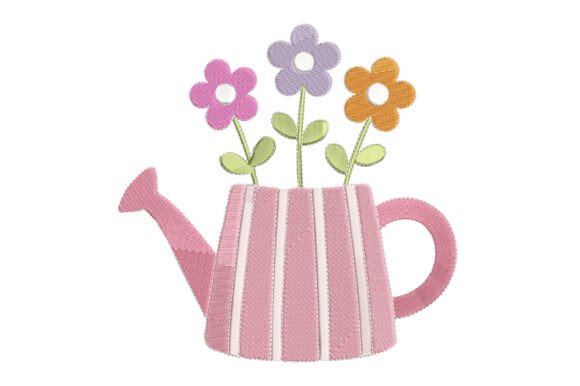
The Flower Watering Can Embroidery Design exudes a friendly, approachable energy right out of the box. Unlike some overly intricate floral patterns that can feel stiff or formal, this design leans into whimsy without sacrificing structure. The layout centers around the silhouette of the watering can, which serves as a perfect anchor for the colorful flowers spilling over the rim. This creates a natural focal point that draws the eye immediately.
From a design perspective, the balance between the solid shape of the can and the organic flow of the flowers is well-calculated. It suggests a mix of stitch types: likely satin stitch for the clean edges of the metal can and fill stitch or running stitch for the softer petals and leaves. This variety promises a textured finish that adds depth to the final product. The color palette implied by "colorful flowers" allows for significant customization, making it versatile for different seasons and themes beyond just spring.
However, the charm comes with a caveat. The detailed nature of the flowers means that the stitch density will play a critical role in how the design reads. If the density is too high, the fabric might pucker; if too low, the definition could be lost. In my experience, designs that rely on fine details require careful attention to stabilizer choice and thread selection to maintain clarity.
Real-World Application: A Case Study in Custom Apparel
To truly evaluate this design, let's imagine a scenario. I am preparing a custom order for a local bakery owner who wants branded aprons for her staff and a line of tote bags for her customers. She wants something that reflects her love for gardening and fresh ingredients. The Flower Watering Can Embroidery Design seems like a perfect candidate.
On a canvas tote bag, this design would shine. The sturdy fabric provides a stable base, allowing the embroidery design to sit flat without distortion. Placing the watering can on the front pocket of the tote creates a subtle yet distinctive brand mark. Customers walking past would see a charming, handcrafted detail that elevates the perceived value of the bag. It transforms a standard accessory into a statement piece that tells a story about the brand's values.
Consider also a baby onesie or a nursery pillow cover. The soft, nurturing imagery of watering flowers aligns perfectly with themes of growth and care. For a personalized gift, adding a name inside the watering can or among the flowers would make the item unique. The design's simplicity ensures it doesn't overwhelm the delicate fabrics often used for baby items, while still providing enough visual interest to stand out in a crowded gift shop.
However, not every application is a success story. If I were to attempt this on a stretchy jersey t-shirt without proper stabilization, the tension of the stitches could cause the fabric to warp, ruining the circular shape of the can. Similarly, on a dark-colored sweatshirt, the contrast of the flower colors would need to be carefully managed. Without bright, high-contrast threads, the design could get lost against the background, diminishing its impact.
Where to Use (and Where to Think Twice)
While the Flower Watering Can Embroidery Design is versatile, there are specific scenarios where caution is required. Small hoop sizes are a primary concern. If the design includes fine details in the center of the flowers, shrinking it down to fit a 4x4 inch hoop might result in muddy stitching. The individual petals could merge, losing the intended character of the pattern. Always check the recommended hoop size before committing to a small garment like a hat brim or a child's sock.
Textured fabrics present another challenge. While a linen tea towel or a denim jacket offers a nice rustic backdrop, heavily textured materials like bouclé or thick wool can hide the finer details of the embroidery. The needles might struggle to penetrate dense weaves, leading to skipped stitches or uneven tension. For these materials, a simpler design with fewer details might yield better results.
Curved surfaces, such as baseball caps or beanies, require special consideration. The curvature can distort the perspective of the watering can, potentially making the handle look misaligned or the flowers appear squashed. If you are using this for an embroidered patch meant to be sewn onto a cap, ensure the backing is rigid enough to support the weight of the stitches. On curved surfaces, the design should be slightly simplified to accommodate the change in angle.
Finally, consider the longevity of the product. Items that undergo frequent washing, like kitchen towels or work aprons, need robust stitching. If the stitch density is too light, the design may fade or unravel after a few cycles. Conversely, if the area is too dense, the fabric beneath may become brittle over time. Testing on scrap fabric is non-negotiable here.
Designer Notes: Ensuring Professional Results
Before you start stitching your next commercial embroidery project with this design, there are several technical steps to take. First, always test the embroidery file on a scrap piece of the same fabric you plan to use. This reveals how the material reacts to the needle penetration and thread tension. Pay close attention to the corners of the watering can and the tips of the petals; these are the areas most prone to breaking or blurring.
Thread color contrast is crucial. If you are using a light-colored can on a white background, the design will disappear. Ensure you have enough contrast between the thread colors and the fabric texture to make the design pop. Running a black-and-white mockup of the design can help you visualize the tonal values and ensure the shapes remain distinct even without color.
Stabilizer selection is equally important. For lightweight fabrics like cotton or silk, a cut-away stabilizer is often necessary to prevent puckering and provide long-term support. For heavier fabrics, a tear-away might suffice, but only if the design isn't too heavy. Don't forget to check the licensing terms if you are planning to sell finished products. Some digital embroidery files have restrictions on commercial use that could affect your ability to sell handmade products or small shop merchandise.
Ultimately, the Flower Watering Can Embroidery Design is a strong asset for any crafter or entrepreneur looking to add a touch of garden-inspired charm to their collection. It strikes a balance between cute and professional, making it suitable for everything from holiday embroidery projects to custom apparel for a boutique. By understanding its strengths and limitations, you can leverage this design to create finished products that customers will love and trust.
Whether you are creating a tote bag design for a craft fair or a baby embroidery set for a new parent, this design has the potential to elevate your work. Just remember that the magic lies in the execution. Take the time to prepare your machine, choose your materials wisely, and test your workflow. When done correctly, the result is a beautiful, durable piece of art that celebrates the joy of creation.